

Award-winning writer - Fiction - Nonfiction - and More

Book Reviews

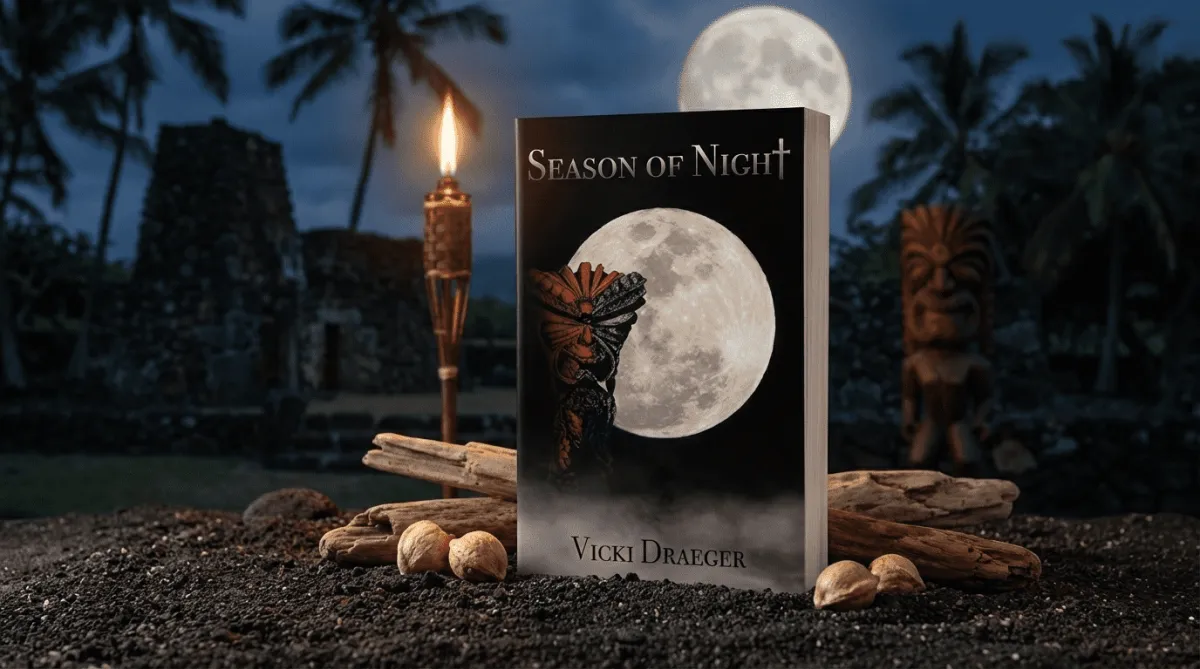
A captivating epic, full of colorful detail, vigorous writing, and strong characters.
Two Hawaiian queens challenge their sexist religion and turn to Christianity in Draeger’s sweeping historical novel.
The story unfolds in the 18th and 19th centuries on the Hawaiian islands, whose residents belong to a polytheistic religion that features human sacrifices to the war god Ku and includes kapu taboos that ban women from eating with men and consuming pork, bananas, or coconuts. (Punishments for female banana-eaters could include being fed to sharks.) Manu and Lani are two wives of King Kamehameha the Great. Manu, over six feet tall and fetchingly corpulent, dominates men, visits European ships to learn English and play checkers, loves to surf, and disapproves of human sacrifice and kapu restrictions. She is opposed by Ano, the high priest of Ku, who has a prophetic vision that she will destroy the old gods. Ano’s plots to drown and poison Manu fail, but his plan to lure her into an extramarital affair with his acolyte succeeds spectacularly. (Kamehameha forgives her and she emerges stronger than ever.) Lani’s royal bloodlines make her the most sacred person in Hawaii, but she hates the kapu regulations that prevent her from having any contact with her own children, who might sully her purity. When American missionaries arrive, Lani takes instruction in Christianity while Manu remains skeptical and flummoxes the ministers and their wives by lounging around the mission house stark naked. Enter Betsey Stockton, a missionary and former enslaved person whose warmth and eloquence start winning Manu over to Christ, which drives Ano to scheme on a grander scale.
Based on historical figures and events, Draeger’s narrative paints a rich panorama of Hawaiian culture, with its cliff diving, bird-feather cloaks, hallucinogens, and kapu restrictions. (Lani is considered so exalted that anyone whose shadow touches her must be executed—which really inhibits her socializing.) There’s also an element of Christian apologetics in the novel: The missionaries and converts are kind and earnest, while the Ku priests are not. (“Ano enjoyed binding the dogs in such a way that he could extract their teeth while they still lived, while they still whimpered, and snarled and suffered. He felt it gave the god additional power.”) Draeger makes the ideological tensions roiling Hawaii human and personal, her vivid prose probing the fraught psychological reality of a life governed by dogma. (On their wedding night, “Kameha’s head is never to be higher than Lani’s and he too is not allowed to stand in her presence. Kameha crawls on his stomach toward the mats where Lani waits in dread.”) Manu is a vibrantly drawn force of nature (“She feels the same exhilaration she always feels at such moments, surging forward on the crest of a majestic wave, the cool sea below, the warm sun overhead, and the challenge of conquering a mighty wave. She speaks aloud to the sky. ‘I’m one with the vast sea. This Jesus is said to have walked on water, but could he ride the waves as I do?’”); readers will cheer on her cosmic confidence.
A captivating epic, full of colorful detail, vigorous writing, and strong characters.
MY SCIENCE TEACHER IS A ZOMBIE
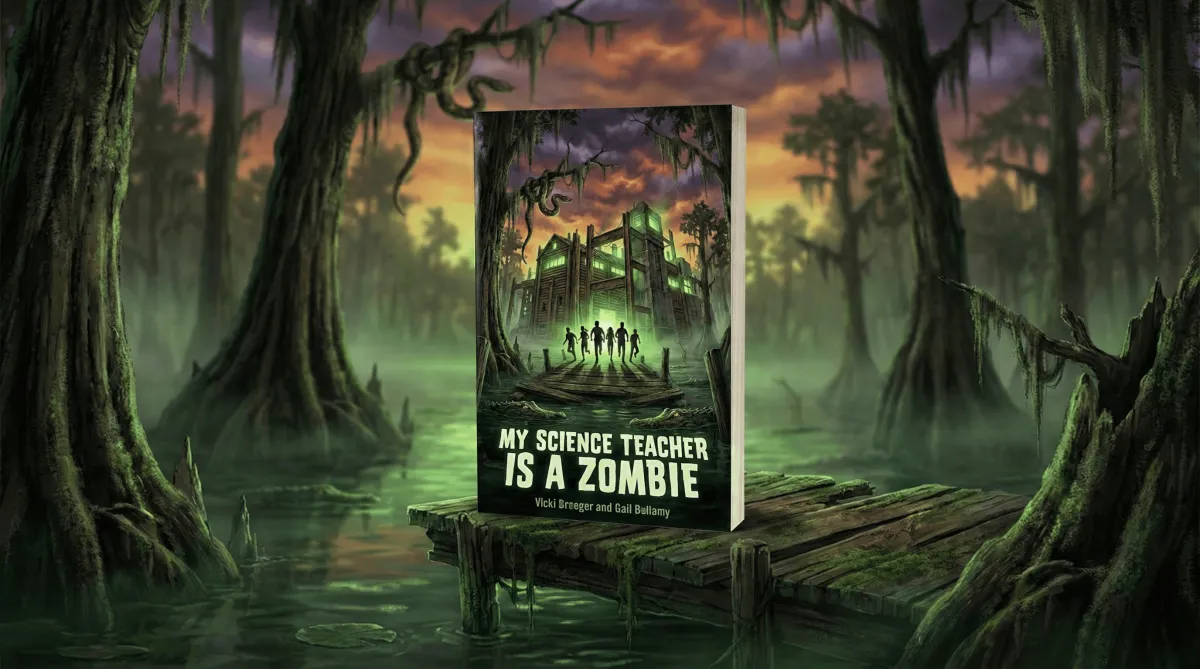
An absorbing, effectively restrained tale of outwitting a formidable evil.
Florida teens who are made unwitting participants in a diabolical plot against the U.S. plan a daring escape in Draeger and Bellamy’s YA thriller.
Best friends Tori Hatch and Ayida Rodella miss their first day of high school after Ayida’s beloved Granny Zulie, a mambo (Voodoo priestess), has a small stroke, worrying the girls so much that they stay up all night. On the day that Tori and Ayida missed, the high school principal announced a science contest, and now they’ve got some catching up to do. Science is a favorite subject of theirs, and the contest’s prize—a week-long field trip to the Everglades, where they’ve never been—sounds amazing. Thanks to their brainpower, they emerge as two among the six winners, who also include new guy Zander Wolfe, a bona fide hottie whom Tori has her eyes on. On their way to the Everglades, the six freshmen realize that something is wrong; it transpires that they’re captives of a sinister individual whose elaborate plan is to weaken American education by zombifying the country’s population. As the zombifying powder still needs perfecting, the bright teens serve as both scientists and guinea pigs. Any hope of escape is quickly dashed by more than one faculty member in menacing zombie form (the mind-controlled variety associated with Voodoo). Tori and Ayida have means of protecting themselves, courtesy of Granny, who, Ayida discovers, also slipped her a certain item that may prove helpful. Granny’s mambo “powers,” combined with the teenagers putting their heads together, may be just enough to devise a way to save themselves, along with all American citizens.
Despite the horror-novel title, Draeger and Bellamy’s story is more suspenseful than outright scary. Many readers will surely appreciate the term “zombie” being used properly here (not designating a brain-eating ghoul). Similarly, Voodoo isn’t sensationalized; some Voodoo powers are on display, but they don’t overwhelm the plot, and there’s no doubt that it’s the practitioner who has the capacity for evil, not the religion itself. The high schoolers are a delightful hodgepodge of varying personalities. Popular girl Rhonda is Tori’s rival for Zander’s affection, while “Peewee,” the youngest of the bunch (he skipped a few grades), is close with the endearing James, who has Asperger’s Syndrome. The novel moves at a deliberate pace, with quite a few scenes depicting Tori, Ayida, and the others dreaming up and debating ways to escape. The tension ratchets up consistently, as the kids are under constant watch and not every plan of theirs is guaranteed to work. Even though Tori is just as unnerved as her fellow students, her narration finds opportunities to lighten the mood: “She pushes through the door and we hear her heels clomping down the wooden deck. High heels? Who would bring high heels on a field trip to the Everglades? Oh wait, Rhonda would.” Draeger and Bellamy keeps their YA audience in mind—the incidents of violence (like when the zombie minions get physical) are never graphic or excessive. While the YA elements (namely the romance) can be predictable, overall, the novel is refreshingly surprising and culminates in a memorable ending.
An absorbing, effectively restrained tale of outwitting a formidable evil.

Vegetable Storybook for Readers and Eaters
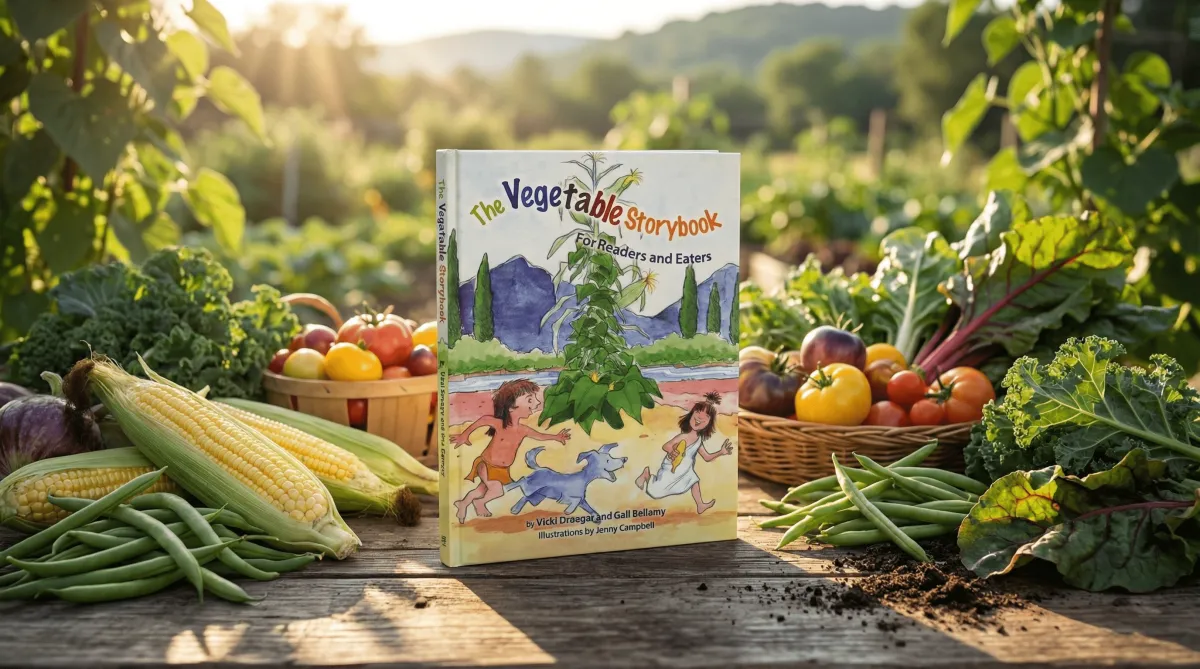
A winner of the Gourmand World Cookbook Awards, The Vegetable Storybook for Readers and Eaters by Gail Bellamy and Vicki Draeger, proves that getting young people to try vegetables is (and should be) a global concern. The themes of food, family and community find meaning in this book.
Illustrations are detailed and fun to look at; the words are well-suited to intermediate readers, but could work well for a story time with preschoolers. The book's chapters are different enough to keep things interesting, but share a common thread: children relating to their environment through the traditions surrounding food and meals.
One of the kid-friendly narratives finds a little Hawaiian boy “sad…and mad” due to the arrival of a new baby, and then reassured by the legend of the kalo plant, main ingredient in poi. Kalo is ‘big brother’ to all Hawaiians, and must be treated with respect, i.e. “Grandmother says, ‘Don't complain in front of the poi.’” Alika likes the idea of being a big brother, and ends up holding the new baby.
Another chapter, Jamal and the Sweetie Pie, evokes the “lovely, sweet, spicy smell” of sweet potato pie that both nourishes and reassures.